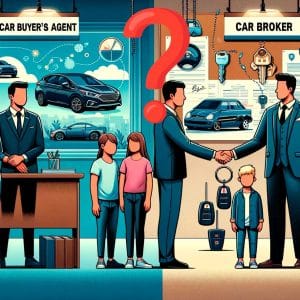
Turns out… it wasn’t.
Our client Collin needed another family vehicle, and his wife jokingly (sort of) said, “Go win it on The Price Is Right.”
So he did. He won the vehicle on January 7, 2026!
An $81,000 Chevrolet Corvette, no less.

This wasn’t even his first rodeo—Collin had won on the show more than 10 years ago.
Apparently, spinning a giant wheel under pressure is easier than most people think.

Collin has three kids, and as glorious as a brand-new Corvette may be, it’s not exactly carpool-friendly.
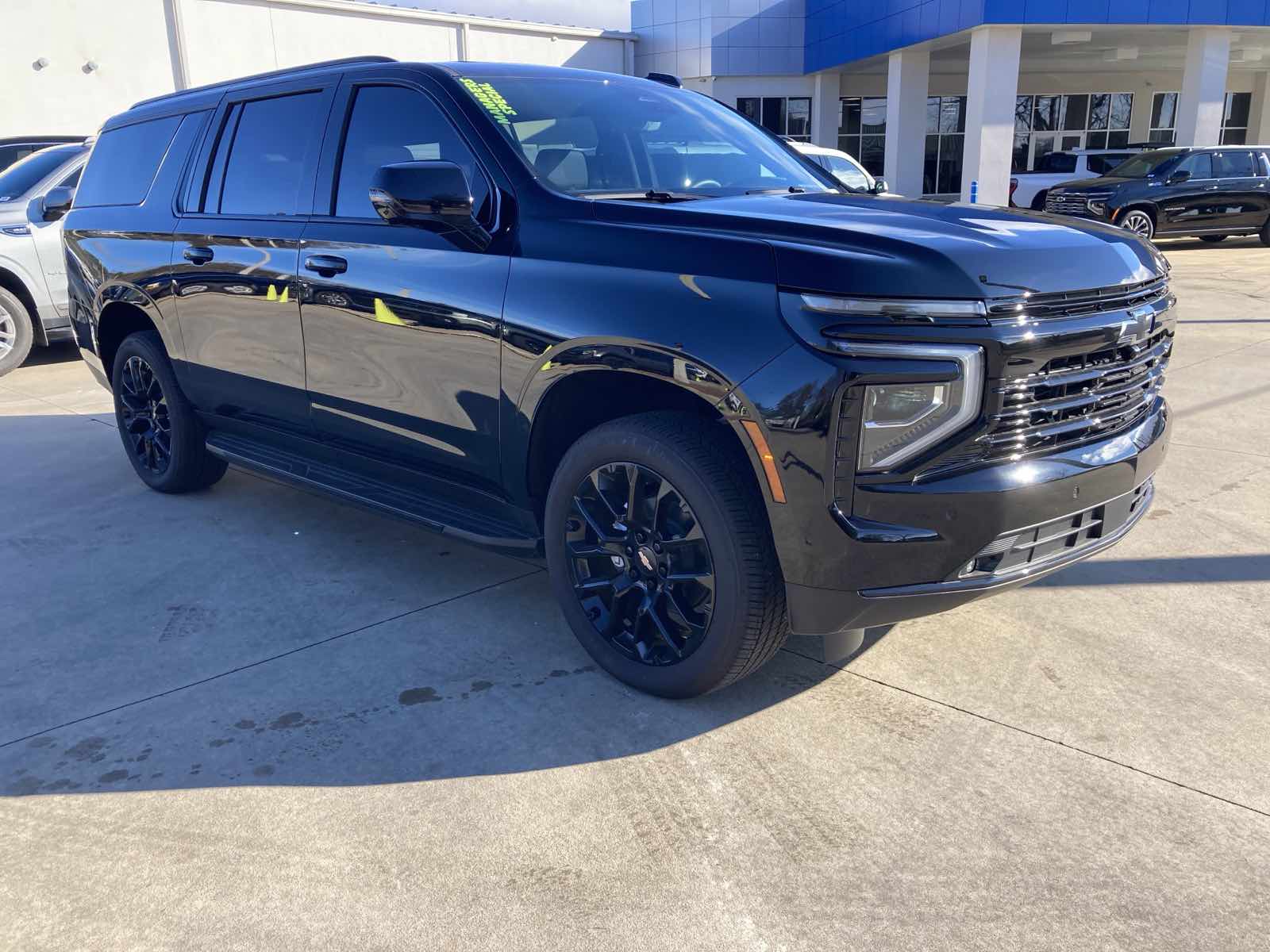
What the family actually needed was a Chevy Suburban—and that’s when the real game began.
Because while winning the Corvette was straightforward, turning it into the right car meant running headfirst into the familiar world of dealership antics, shell games, moving targets, and “that price is only good if you’re a recent college graduate, GM supplier and active military” nonsense.
So Collin turned to Car Pal for help.
Until—finally—we found Becky in Georgia, who played it straight and made the impossible feel easy.
This story isn’t just about a Corvette, a Suburban, or a game show win.
It’s about how car dealerships really operate, why so many smart consumers feel bamboozled, and what it looks like when someone actually treats you fairly.
Keep reading—we’re breaking it all down (and yes, the Price Is Right photos are too good not to share 😉)
Advocating for clients every day provides a front-row seat to one of the most persistent problems in automotive retail: the unnecessary theater.
Consumers routinely pay substantial profit margins for goods and services across every industry. Why do consumers resist profit margins for cars?
The profit margin, in itself, is not the issue. I would argue that consumer reticence stems from how transactions are conducted—and from how sellers disrespect the time and intelligence of buyers, particularly those with scant time and high intelligence.
If one were to argue in defense of car dealerships (and I’m not…), the counterpoint might be:
Why do consumers insist on negotiating? Why not simply pay the price and move on?
The answer is straightforward. In virtually every other retail environment—grocery stores, pharmacies, big-box retailers, and online marketplaces—pricing may carry high markups, but it is generally transparent.
There is no illusion, no bait-and-switch, no dramatic reveal once you are already emotionally invested in the purchase. Automotive retail remains a notable exception.
A recent example illustrates the problem clearly. A 2025 Suburban advertised online showed a discount of $13,150. However, when the terms were provided in writing, nearly $9,600 in accessories were added back—items of marginal or no value to many consumers.
The headline discount, while technically accurate, was functionally misleading.
This practice persists because enough consumers ultimately accept it.
The experience often worsens in the finance office. After hours of waiting, paperwork, and decision fatigue, buyers are presented with extended warranties and add-on products. Rarely are key questions asked:
Even highly educated consumers can make poor decisions at this stage—not because of a lack of intelligence, but because of exhaustion and time pressure.
Transparency should not be a competitive advantage; it should be the baseline.
Until pricing is presented honestly, without theatrics or engineered fatigue, consumers will continue to distrust the process—and professionals will continue to be needed to protect them from it.
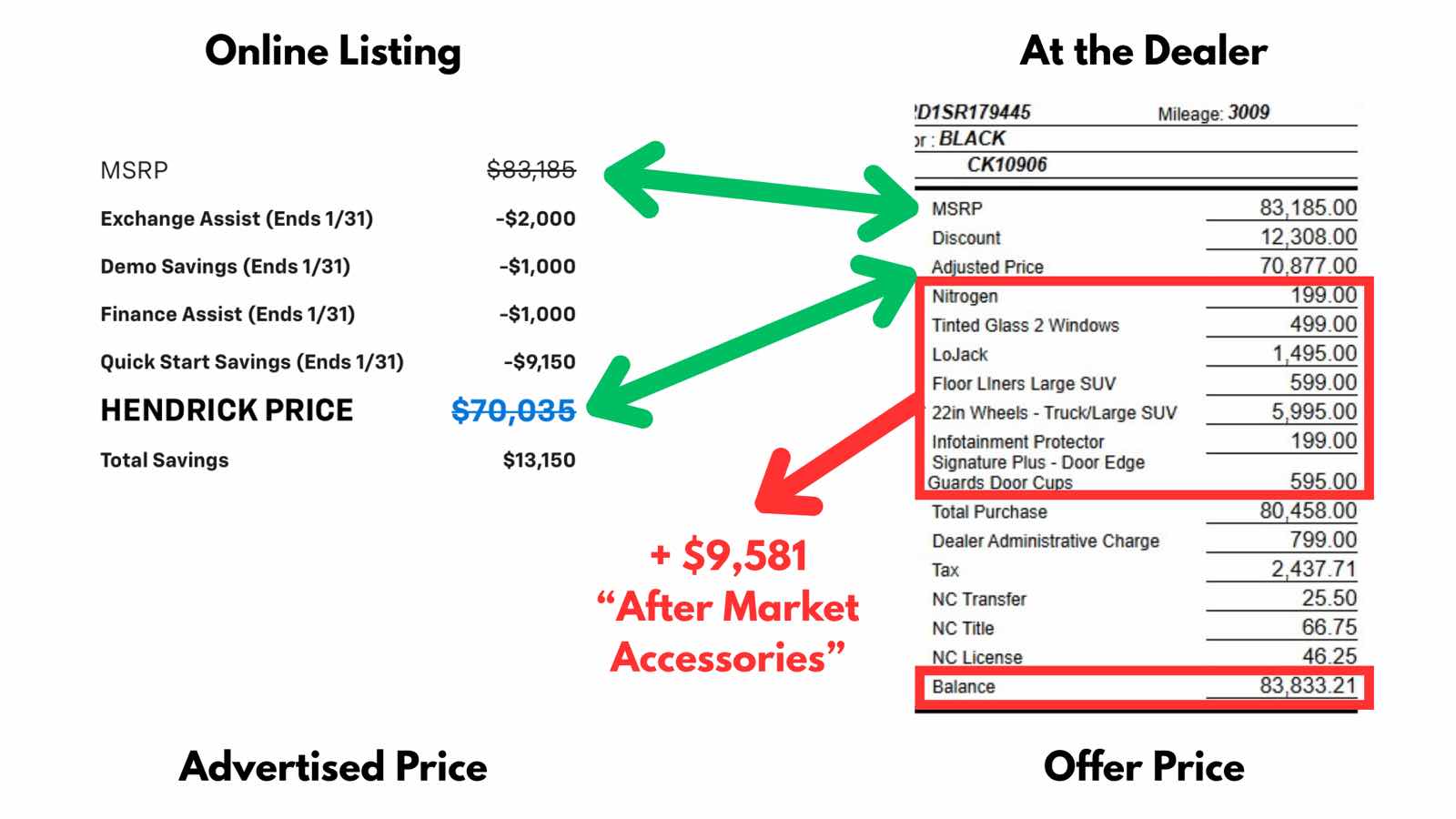
On the left is the online advertisement our client sent to us. On the right is the written offer we obtained.
Once the consumer is peeled from the ceiling after setting eyes on the $9,000 delta, the dealership’s ultimate goal is to settle somewhere in the middle of the advertised price and the real (in writing) bottom line.
This happens often (meeting in the middle or worse…) that a large percentage of dealerships will continue to be rewarded for gaming the search engines this way—posting a price they won’t actually honor.
The ultimate cost to do business with such dealerships is a far cry from what consumers hope to achieve after what they believe has been thorough, thoughtful, and studious searching.
My argument is that using consumer search tools and finding suitable vehicles should account for 80% of the work and time required to purchase or lease a vehicle. Instead, it’s the first one-eighth to one-quarter of what will ultimately be needed from a consumer because so many dealerships have found ways to *game* the vehicle search engines to appear first or more often, just like Hendrick Autos did in the example above.
Obviously, our solution is to suggest that consumers outsource the work
(to us —for example—😉)and save time and money, and get it done without brain damage.